
You know that moment when a TikTok hits your For You Page and the comments are somehow funnier than the video? The top comment is a perfect one-liner. The replies are a full-blown sitcom. Someone “clocked the tea” with scary accuracy. Another person “went to school with her cousin’s roommate” and suddenly we have lore.
And then you scroll a little longer and start wondering: wait, are these people real? Or are we watching a performance of reality that just happens to look like the internet?
Because here’s the thing. TikTok comments aren’t always real, not in the “birds aren’t real” way, but in the much more boring, more unsettling way. Sometimes they’re manufactured. Sometimes they’re nudged. Sometimes they’re posted by accounts that exist mostly to stir up a vibe. And the screenshots people bring into the comments to “prove” what happened? Those aren’t always real either.
The comment section is a stage, not a courtroom
TikTok has trained us to treat the comment section like a lie detector test. If the comments agree the creator is shady, the creator is shady. If a bunch of accounts say “I was there,” then we were there. If someone posts “I can’t believe she did this again,” the “again” becomes canon.
But TikTok comments function more like crowd noise at a live show. They build momentum. They tell you when to gasp and when to laugh. They shape what you think you’re seeing, even if the actual video is kind of… nothing.
Creators know this. Fans know this. Haters definitely know this. “Pinned comment culture” is basically a whole job now: pin something witty to steer the vibe, pin a defensive note to calm the discourse, pin a question so people rewatch and reply. A comment can be a punchline, a PR statement, or a match tossed into dry grass.
So when a creator says, “Guys, stop believing everything you see,” they’re not just talking about deepfakes. They mean the entire ecosystem that turns casual posts into courtroom drama.
Screenshots are the internet’s favorite “evidence,” and they’re way too easy
A screenshot feels final. It has that crisp, rectangular authority. It’s the digital version of, “I wrote it down.” Except you can write down literally anything.
Fake chat screenshots have gotten so easy to generate that you don’t even need to be particularly techy or particularly evil. You just need a reason, which can be as innocent as “this would be funny,” or as messy as “I want to ruin someone’s week.”
There are tools that let you mock up entire conversations in different app styles, complete with timestamps, bubbles, typing indicators, profile pics, and that painfully familiar spacing. If you’ve ever seen a “receipts” carousel on TikTok that looks a little too perfect, it might be because it was designed to look perfect. People use stuff like fake tiktok chat setups to make memes, prank friends, storyboard skits, or create realistic props for film and TV. And yes, some people use it to manufacture drama, because attention is a currency and screenshots are a printing press.
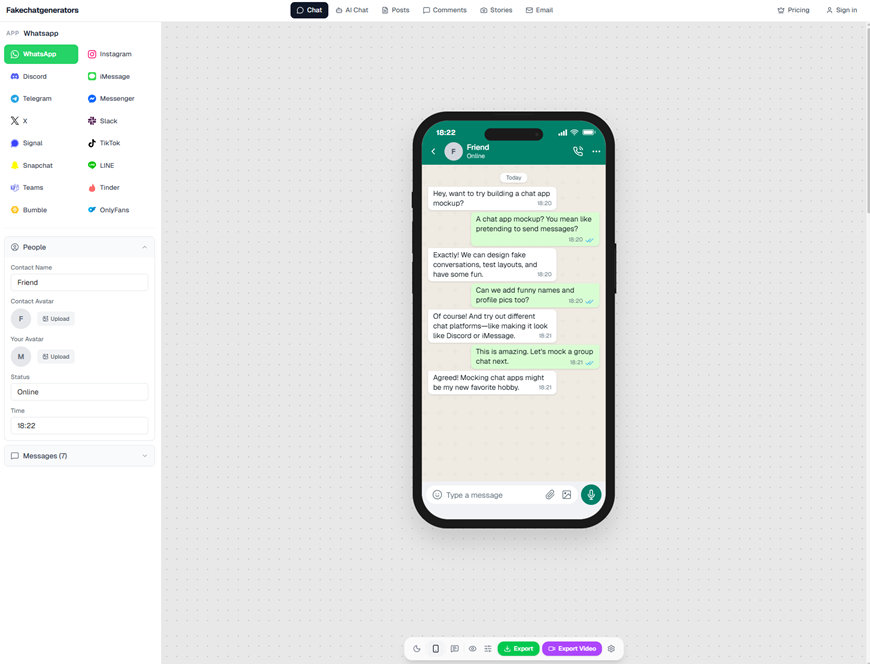
fakechatgenerators.com lets you mock up chat screenshots across 16 platforms
The worst part is not that these tools exist. The worst part is how quickly we accept the screenshot as a substitute for context. We don’t ask what happened before the screenshot. We don’t ask who took it. We don’t ask why the font looks slightly off, or why the time is cropped out, or why the conversation conveniently starts at the exact moment someone says something incriminating.
We just repost it, add “nah this is CRAZY,” and let the algorithm do its thing.
“But I saw it in the comments” is not a source
TikTok has a special talent for turning vibes into facts. Someone will comment, “He got arrested last year,” and if it gets 20k likes, it becomes a truth people repeat with confidence. That’s not journalism, that’s a chain letter.
The platform rewards punchy certainty, not careful accuracy. A measured comment like “Do we know if this is confirmed?” gets three likes and a reply that says “you must be fun at parties.” Meanwhile, the unverified claim with a sprinkle of inside knowledge becomes the top comment, pinned by the creator, and quoted in reaction videos like it’s a press release.
And once a rumor has a screenshot, it becomes harder to kill than it ever should have been. Even if it’s fake. Even if it’s obvious. Even if the creator debunks it in their next post. The screenshot already did its job.
The new literacy: not just “is it edited,” but “why does it exist”
We’re entering an era where media literacy is less about spotting a blurry Photoshop job and more about reading intent. Not “Can someone fake this?” because yes, someone can fake this. The better question is “What does this screenshot want me to feel?”
Does it want you angry at a stranger? Does it want you to pick a side instantly? Does it conveniently confirm what you already suspected about someone you don’t like? Does it turn a complicated situation into a clean villain plot?
That’s usually your sign. Not that it’s definitely fake, but that it’s designed to travel.
And it’s not just chats. Images get generated, edited, and “enhanced” constantly. A picture can be AI-generated. It can be real but altered. It can be from three years ago and reposted like it happened yesterday. Tools exist to help detect that kind of tampering, and some are built for speed and scale because platforms and newsrooms actually need that. An ai image detector like Sightova, for example, is positioned for journalists and trust and safety teams, and it claims 98.7% detection accuracy across 50+ generative models with sub-150ms latency, plus flags for NSFW, violence, and document tampering. That’s not a magic wand, but it’s a sign of where we’re at: the “is this real” question now needs infrastructure.
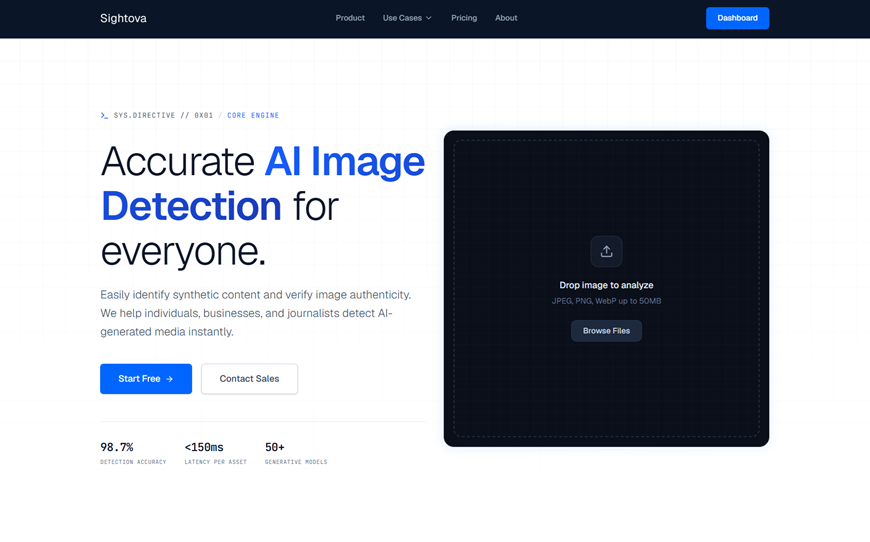
sightova.com flags AI-generated, tampered, NSFW, and violent imagery in milliseconds
So what do we do, stop believing everything?
No. That’s not realistic, and honestly it’s not the point. The internet is built on storytelling. TikTok especially. The jokes, the exaggeration, the skits, the little fake scenarios people act out in comment threads, that’s part of the fun.
The shift is knowing what you’re consuming.
If a screenshot is being used to hurt someone, pause. If a comment section seems like it’s reading from the same script, pause. If you feel that adrenaline spike like “I need to send this to someone right now,” pause harder.
Ask boring questions. Who posted this first? Is there a full video? Are there multiple sources, or just multiple reposts of the same thing? Does anyone benefit from you believing it immediately?
Sometimes the answer will still be messy. Sometimes you won’t be able to tell. But even a tiny delay, even five seconds of skepticism, breaks the spell a little.
Because TikTok’s most powerful trick isn’t making things go viral. It’s making things feel true before they’ve earned it. And in 2026, “it feels true” is basically the most expensive lie we have.